If
you're flying from the United States to Europe this summer, prepare for
record-breaking air traffic. Record flight volumes, limited airspace,
recurring strikes, and the new EES biometric border system are putting
additional pressure on airports and travelers arriving from outside the
Schengen Area.
This
guide breaks down what’s driving the congestion, which major airport
hubs travelers should monitor, and what actually shortens your time in
line — from free preparation steps to VIP airport assistance.
- Summer 2026 is the first peak travel season in which record flight volumes, constrained airspace, strikes, and fully operational EES border checks are overlapping.
- EES adds biometric registration for most non-EU visitors traveling for a short stay, generally involving fingerprints and a facial image. Children under 12 are not fingerprinted. During the rollout, ACI Europe reported processing times increasing by up to 70% at some airports.
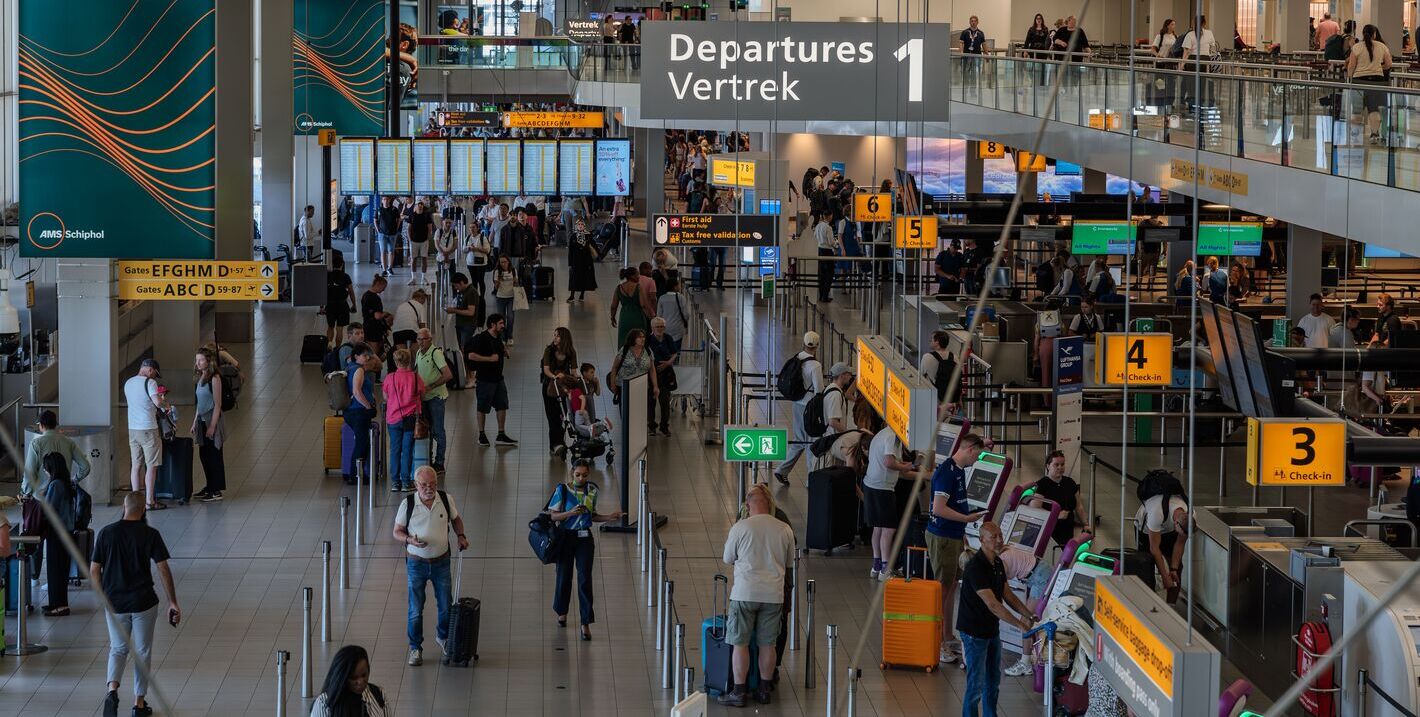
- Paris, Frankfurt, Amsterdam, Athens, Rome, and the major Spanish hubs are among the airports travelers should monitor. London sees heavy summer traffic too, although EES does not apply on UK soil.
- Preparation helps at the margins, but it cannot shorten the EES queue or move you through a strike-hit terminal.
- What actually changes your trip is booking VIP assistance: a greeter walks you straight to the right lane, Fast Track gets you through priority security and passport control, a porter takes care of your bags, and your transport is already arranged and waiting.
How busy are European airports right now?
Busier than ever — and climbing. On July 24, 2026, Europe’s air-traffic network reached a new all-time record of 37,659
flights. During the same week, the network averaged 36,554 flights per
day — 3% more than during the equivalent week in 2025. The new record
surpassed the previous high of 37,640 flights, set two weeks earlier.
For passengers, record traffic means fuller flights, more crowded terminals and far less margin for disruption.
| The surge shows up in SkyVIP's own numbers too: bookings for European airport assistance in June and July 2026 were approximately twice as high as during the same period in 2025. |
Source: SkyVIP internal booking data, July 2026.
Why isn't there more capacity to handle the crowds?
Because Europe's air-traffic network currently has almost no spare capacity. Eurocontrol,
the body that manages European air traffic, describes the network as
already saturated, with roughly a fifth of European airspace currently
unavailable and all traffic squeezed into what remains.
Demand
keeps climbing anyway. Traffic this summer is expected to run about 2%
above 2025 on average, and up to 5.1% higher in some weeks. More flights
in less airspace means congestion.
The new EES border system makes lines longer
Since 10 April 2026, EES
has been fully operational at the external borders of the 29 European
countries using the system. It replaces passport stamps with digital
entry and exit records for most non-EU nationals visiting for short
stays and records passport information and biometric data, subject to
certain exemptions.
The
extra biometric step is stretching passport-control queues. During the
rollout, ACI Europe reported processing times increasing by up to 70% at
some airports, with waits of up to three hours at peak periods. By July
2026, airport and airline groups were reporting peak border-control
waits of up to five hours at some locations.
SkyVIP's
own booking data shows the same pressure from the demand side: between
April and July 2026 — the first months of full EES operation — bookings
at major Schengen hubs grew 122% year over year, against 36% at UK and
Irish airports, with connection assistance growing fastest of all at
157%. Source: SkyVIP internal booking data, July 2026. If your itinerary enters the Schengen Area at a connecting hub, that is the queue to plan your layover around.
Where do you complete EES on a connecting itinerary?
Travelers normally complete EES at the first airport where they cross the external Schengen border, not necessarily at their final destination. For example, a traveler flying New York–Amsterdam–Athens completes EES in Amsterdam. A passenger remaining airside while connecting between two non-Schengen flights generally does not enter the EES process.
Strikes affect flights, too
Industrial
action remains one of the most unpredictable sources of European travel
disruption, and France continues to be the network’s largest delay
hotspot. As of late July 2026, France had generated 31% of all en-route
delays in the European aviation network year to date, according to EUROCONTROL. Capacity constraints, staffing shortages, system-transition issues, weather, and industrial action have all contributed.
The good news: strikes rarely come without warning, because French controller unions are legally required
to give five days' notice. The bad news: a French ATC strike also
delays flights that merely cross French airspace, so disruption spreads
far beyond France.
Which major European airports should travelers monitor this summer?
The airports below are major hubs where heavy passenger volumes can overlap with EES processing, complex connections, or exposure to industrial action. This is a watchlist rather than a real-time delay ranking, and conditions can change quickly. Verify specific strike dates and airport updates close to your travel day.
| AIRPORT | WHY IT'S UNDER PRESSURE | WHERE YOU'LL FEEL IT MOST |
|---|---|---|
| CDG — Paris | Major external Schengen gateway + high passenger volume + exposure to French ATC and airport-worker strikes | Passport control, plus baggage and turnaround delays on strike days |
| FRA — Frankfurt | Major gateway for non-Schengen arrivals + heavy connecting traffic | Biometric passport control; tight connections |
| AMS — Amsterdam Schiphol | High-volume, capacity-constrained hub running EES enrolment | Passport-control queues and security peaks |
| MAD / BCN — Spain | EES + rolling ground-handling strikes; separate Spanish ATC dispute at regional towers | Check-in and baggage delays on strike days, especially on budget carriers |
| LHR — London | Summer peak + heavy transatlantic volume; EES doesn't apply on UK soil, but if your next stop is in the Schengen Area, you'll still hit EES processing there | Security and immigration peaks; connection risk |
| FCO — Rome | EES at peak volume + recurring Italian aviation strikes | Passport control; strike-day delays |
| ATH — Athens | Staff shortages + record tourism traffic + EES | Passport-control queues; ATC-driven delays |
These are important hubs to monitor, but difficult conditions can extend well beyond Europe’s largest airports — so wherever you travel, preparation determines how much of the disruption you feel.
How should you prepare before you fly?
Here's what protects your itinerary:
- Arrive at least three hours before departure during peak season and, if your connection involves entering the Schengen Area, choose a layover of at least three hours.
- Keep your passport, return or onward ticket, and accommodation details easily accessible before you reach border control.
- Choose early-morning flights — they're less exposed to the delays that pile up through the day.
- Travel carry-on only when possible, to skip the baggage-claim bottleneck.
- Check strike news and your flight status in the days before you travel — French ATC strikes come with five days' notice.
Preparation
lowers your risk, but it can't shorten an EES queue, relieve a
saturated network or speed up a strike-hit terminal. For that, the only
real lever is moving through the airport differently.
How does VIP airport assistance help?
VIP airport assistance — sometimes called meet & greet
— pairs you with a greeter who knows the terminal and moves through it
with you. SkyVIP provides it at more than 500 airports worldwide,
including every major European hub. Four things change:
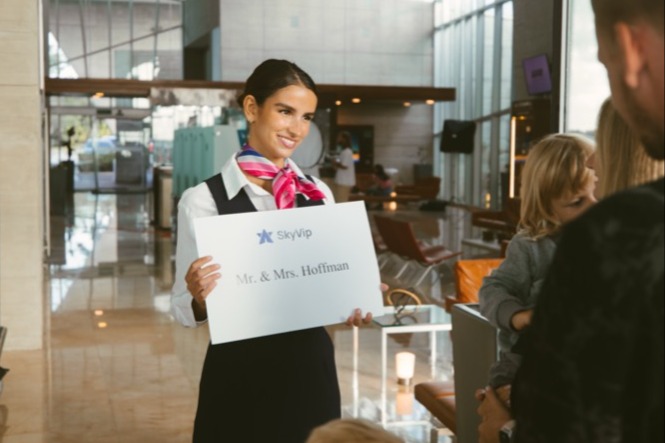
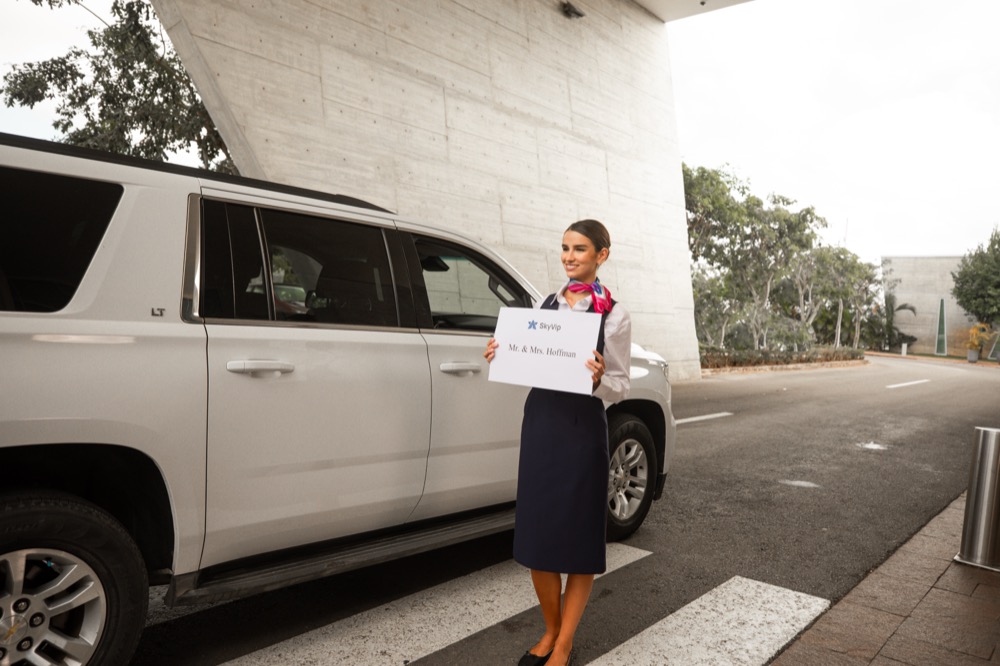
A personal greeter from the moment you land
A
dedicated greeter meets you at the gate or a set meeting point and
stays with you the whole way through. At a crowded, unfamiliar airport
that can save an hour or two: straight to the correct EES kiosks,
passport-control lanes and onward gate — no detours, no guesswork.
Fast Track through priority lanes where available
Where
official priority lanes exist for security and passport control, your
greeter takes you through them. All access runs through official airport
channels — you still complete every check, just faster. With EES
stretching passport-control waits, priority lanes are the single biggest
time-saver available.

A porter for your checked luggage
A
porter carries your checked bags from the curb to the check-in desk
when you depart, and from the baggage carousel to your vehicle when you
arrive. Carry-on stays with you.

A car across the tarmac on the top tiers
With VIP Terminal and VIP Private Suite,
a private car drives you across the tarmac between the aircraft and the
VIP facility — no gate walks, no boarding lines, no shuttle bus. The
car covers the tarmac leg only; transfer to or from your hotel is a
separate, paid add-on available with all three service tiers.
Every
traveler subject to EES still completes biometric registration,
passport control, and security — no service can skip the mandatory
checks.
Don't let a record-breaking summer wreck your trip
You
can't change how busy Europe's airports are this summer — only how you
move through them. Smart routing, early flights and carry-on-only
packing cover part of it; for the rest, a greeter with priority-lane
access is the difference between hours in line and minutes.
Book your airport VIP service now
Compare all three SkyVIP service tiers and lock in your dates before peak availability fills.
Frequently asked questions
Why are European airports so busy in summer 2026?
Record
flight volumes, a saturated air-traffic network, strikes in several
countries, and the first full summer of the EES biometric border system
are colliding at once — pushing wait times at major hubs well above
normal.
Does EES make passport-control lines longer?
Yes.
EES adds biometric registration for most non-EU travelers visiting the
Schengen Area for a short stay. This generally involves fingerprints and
a facial image, although children under 12 are not fingerprinted.
During the rollout, ACI Europe reported airport border-control
processing times increasing by up to 70%, with the longest queues
occurring during peak travel periods.
How early should I arrive at a European airport in summer 2026?
Plan
to arrive at least three hours before departure during peak summer. If
your itinerary includes EES processing during a connection, choose a
layover of at least three hours whenever possible.
Can SkyVIP skip passport control or EES for me?
No.
Every traveler subject to EES completes the mandatory biometric and
passport-control checks. SkyVIP takes you straight to the correct
process and uses official priority lanes where available — the required
checks remain the same, but the experience is significantly faster.
Which major European airports should travelers monitor this summer?
Travelers
should pay particular attention to Paris (CDG), Frankfurt (FRA),
Amsterdam (AMS), Athens (ATH), Rome (FCO), and the major Spanish hubs,
especially when an itinerary involves EES processing or a tight
connection. London Heathrow also experiences heavy summer traffic,
although EES does not apply on UK soil.
Should I book airport assistance in advance?
Yes. Half of summer 2026 bookings were made within about five days of the flight — and the busiest dates get booked earliest. Booking ahead of your travel date locks in the service for exactly when you'll need it.
Recent from our Blog