Back

Europe's new Entry/Exit System (EES) is reshaping border control across the Schengen Area. For many non-Schengen travelers, the biggest risk is no longer an immigration line - it is missing a connecting flight.
Under EES, eligible travelers entering or leaving the Schengen Area must complete biometric registration, including fingerprint and facial image capture, during their first border crossing. This means the first European airport on the itinerary becomes the point where passport control, biometric checks, immigration procedures, terminal transfers, baggage claim, and tight flight connections all come together. According to the European Union, EES will digitally register non-EU nationals each time they enter or exit participating countries.
For passengers arriving from the United States, the United Kingdom, Canada, the Middle East, or Asia, the first Schengen airport is where EES formalities take place. If you are arriving in Frankfurt, Munich, Amsterdam, Paris, Madrid, Barcelona, Rome, Athens, or Lisbon before continuing to another European destination, additional border control procedures should be factored into your connection time.
Why EES is increasing pressure at European airports
Unlike the traditional passport-stamp process, EES introduces biometric verification, self-service kiosks, document validation, and border control checks. While the system is designed to strengthen security, it can increase processing times, particularly during the first implementation period and peak travel seasons.
The challenge is even greater during summer, when Europe's largest hubs handle record passenger volumes, multiple long-haul arrivals, limited staffing, and occasional technical issues with new border systems. According to ACI Europe, the region's airports handled a record 2.6 billion passengers in 2025, with international traffic continuing to grow ahead of the full EES rollout.
For travelers with short layovers, the combination of biometric registration, passport control, immigration queues, terminal transfers, and security screening can significantly reduce the available connection time. Even passengers flying Business or First Class are not exempt, as EES applies at border control rather than at the airline level.

How travelers can reduce the risk
To avoid unnecessary delays during EES implementation, travelers should:
- allow extra connection time at the first Schengen airport;
- have passports and travel documents ready before reaching passport control;
- check terminal transfer requirements before departure;
- monitor airline updates for schedule changes;
- consider Meet & Greet, VIP airport assistance, or Fast Track services at busy airports, where available, to receive guidance through immigration, border control, baggage claim, terminal transfers, and connecting flights
For passengers with tight flight connections, families, elderly travelers, or those unfamiliar with major airports across Europe, airport assistance can reduce stress, save time, and make the transfer process more predictable.
The biggest hidden risk: your first European connection
Many passengers assume they will deal with immigration at their final destination. That is not always the case.
If you are flying to a Greek island, Mallorca, Ibiza, the South of France, or another European leisure destination, your first Schengen airport is often a major hub. This is where EES can happen.
For example:
A traveler flying New York → Frankfurt → Mykonos may need to complete EES in Frankfurt before continuing to Greece.
A traveler flying Los Angeles → Munich → Santorini may face biometric checks in Munich before boarding the island connection.
A traveler flying Miami → Madrid → Ibiza may process EES in Madrid before continuing to the Balearic Islands.
A traveler flying Chicago → Amsterdam → Crete may need to clear EES in Amsterdam before the next flight.
This is the part many travelers still do not realize. The line is not just an inconvenience. It can become the reason you miss the second flight.
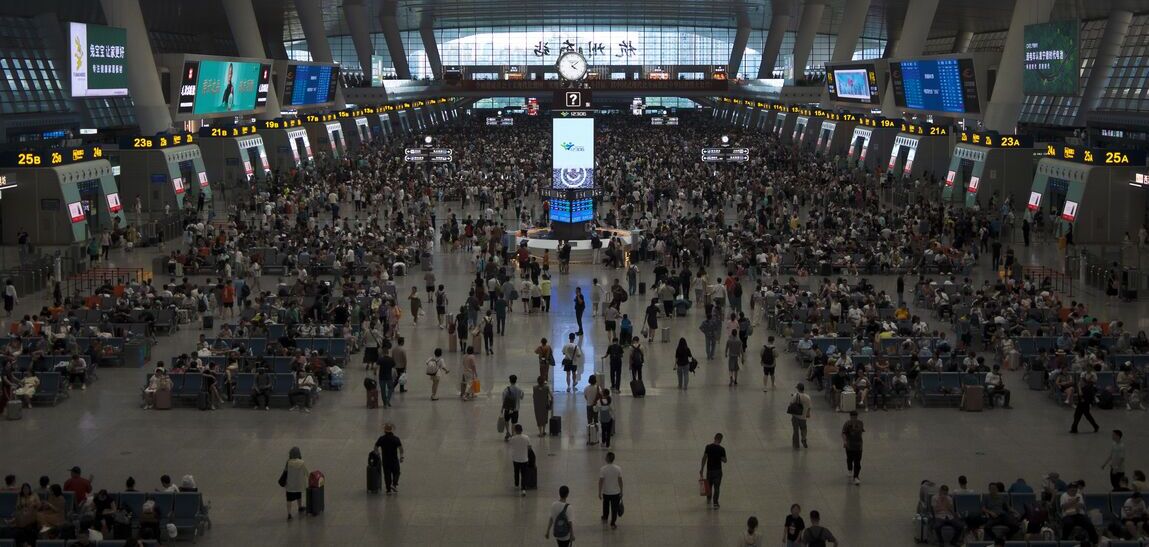
Most affected airports to watch this summer
Frankfurt Airport
Frankfurt is one of Europe’s most important long-haul gateways and a major connection point for travelers heading deeper into Europe. In 2025, Frankfurt Airport handled about 63.2 million passengers, with European routes and Southern/Southeastern Europe showing strong growth. That makes Frankfurt especially important for travelers connecting to Greece, Italy, Croatia, Spain, and other summer destinations. The airport is large, busy, and complex even on a normal day. Add EES processing, terminal walking time, security, and a tight connection, and the margin for error becomes much smaller. For passengers arriving from outside Schengen and continuing onward, SkyVIP Meet & Greet can be especially valuable at Frankfurt because the service is not only about comfort. It is about being guided through the airport by someone who knows the route, the process, and the fastest available way forward.
Munich Airport
Munich is another major entry point for travelers heading to Southern Europe, ski destinations, luxury resorts, and Greek islands. ACI Europe listed Munich among the major airports with strong 2025 passenger growth, and it remains one of the key hubs for international-to-European connections. For families, elderly passengers, VIP travelers, and anyone traveling with a short connection, Munich can become stressful when EES lines are longer than expected. A 90-minute connection that once felt comfortable may no longer be enough if biometric processing, passport control, and terminal movement all take longer than planned. SkyVIP helps travelers move with confidence through arrivals, connections, and departures, including guidance through EES-related formalities and coordination to the next gate whenever service is available.
Amsterdam Schiphol
Amsterdam Schiphol is one of the busiest gateways in Europe. ACI Europe reported that Schiphol handled 68.77 million passengers in 2025, placing it among Europe’s top airports by passenger volume. Schiphol is especially important for travelers connecting from the U.S. and UK to Greece, Spain, Italy, Scandinavia, and Eastern Europe. When large numbers of people go through the EES process, lines at a hub can quickly grow longer, and the effect spreads fast. One delayed border process can affect baggage timing, gate changes, lounge time, and onward flights. For passengers who do not want to navigate Schiphol alone, Meet & Greet provides personal airport assistance from arrival through the next step of the journey.
Athens International Airport
Athens is not only a final destination. It is also the gateway to many Greek islands. In 2025, Athens International Airport reached almost 34 million passengers, with international passenger traffic up significantly from the previous year. For travelers heading to Mykonos, Santorini, Crete, Rhodes, Corfu, Zakynthos, Paros, Naxos, and other island destinations, Athens is often the first or final connection point. During summer, the airport receives a heavy mix of long-haul travelers, European vacationers, families, cruise passengers, and island connections. EES adds another layer to an airport that is already operating under strong seasonal pressure. For travelers connecting onward to the islands, even a moderate delay at border control can affect the next flight.
Greek island airports: Mykonos, Santorini, Rhodes, Corfu, Crete
The Greek islands are one of the clearest examples of why EES matters. These airports are seasonal, crowded, and heavily dependent on summer tourism. Fraport Greece reported that its 14 regional airports handled more than 37 million passengers in 2025, with Rhodes alone surpassing 7 million passengers. This summer, airport leaders in Greece have already raised concerns about EES pressure at tourist-heavy airports. The Guardian reported that the CEO of Fraport Greece criticized the system after long queues affected airports including Rhodes, Corfu, Mykonos, and Crete. For travelers going to Greek islands, the airport experience can quickly become the least relaxing part of the vacation. Long-haul flight, biometric checks, baggage claim, domestic connection, ferry timing, hotel transfer — one delay can disrupt the entire day. SkyVIP’s value is strongest in exactly these moments. A greeter helps guide the traveler through the process, coordinates the airport route, assists with luggage where available, and helps connect the passenger to the next flight, driver, or transfer with less stress.
Madrid and Barcelona
Spain is another major pressure point. Aena reported that Spanish airports handled more than 321.6 million passengers in 2025, with Madrid reaching 68.17 million, Barcelona 57.48 million, and Palma de Mallorca 33.8 million passengers. Madrid and Barcelona are especially important because they are major entry points for travelers continuing to Mallorca, Ibiza, Menorca, the Canary Islands, Andalusia, and other Spanish leisure destinations. For a traveler flying from the U.S. to Ibiza through Madrid, the first airport experience in Spain may decide whether the rest of the journey goes smoothly. If EES processing takes longer than expected, the connection to Ibiza can become tight very quickly.
Mallorca and Ibiza
Mallorca and Ibiza are summer icons, but their airports are also extremely busy. Palma de Mallorca handled 33.8 million passengers in 2025, making it one of Spain’s busiest airports, while Ibiza Airport recorded about 9.1 million passengers, including 5.4 million international passengers. The challenge with islands is simple: travelers often arrive in waves. Flights land around similar times, baggage areas fill quickly, drivers wait outside, and hotel check-in plans depend on the airport process going smoothly. With EES, travelers should not assume the arrival experience will be the same as previous summers.
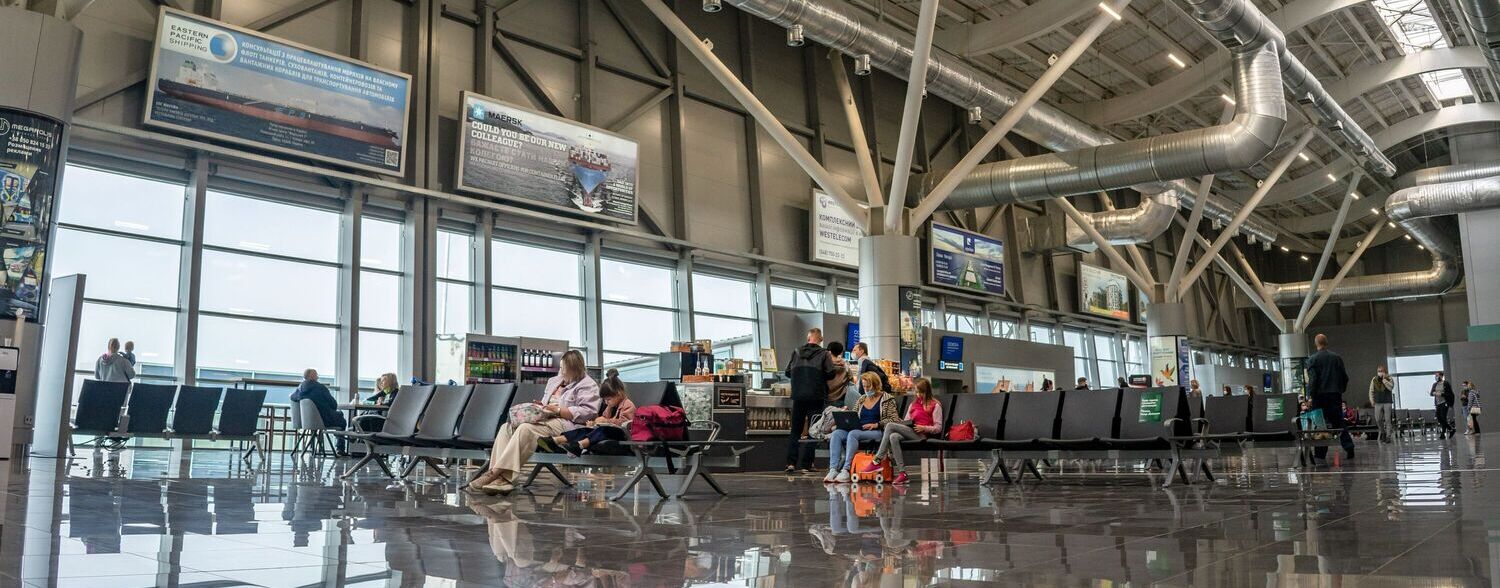
How SkyVIP helps on arrivals?
For arrivals, SkyVIP Meet & Greet gives travelers personal airport assistance from the moment they land. The greeter assists through the arrival process, guides the passenger toward the appropriate EES or passport control area, helps identify the fastest available airport process, assists with baggage claim where included or available, and escorts the traveler to the driver or transfer point. For families, VIP clients, elderly travelers, executives, and passengers arriving after long overnight flights, this makes a major difference. Instead of trying to understand signs, lines, kiosks, and airport procedures alone, travelers have a local airport professional with them. SkyVIP can also coordinate luxury car service in many destinations, creating a smoother arrival from aircraft to airport exit to final destination.
How SkyVIP helps on departures?
EES does not only affect arrivals. Travelers leaving the Schengen Area may also face exit checks.
That means departures from Europe can also take longer than expected, especially at major airports during morning and evening peaks. A traveler flying from Madrid to New York, Paris to Miami, Frankfurt to Los Angeles, or Rome to Dubai may face more airport formalities than before.
SkyVIP departure assistance begins curbside or at the agreed meeting point. The greeter helps with check-in, baggage, security guidance, Fast Track or priority options where available, EES-related departure formalities, lounge escort when applicable, and boarding support. For VIP travelers, this protects the most valuable part of the journey: time.
How SkyVIP helps with connections?
Connections are where SkyVIP can be most important this summer. When your first flight enters the Schengen Area, EES may happen before your second flight. If the first flight is delayed, if the EES line is long, if the airport is unfamiliar, or if the next gate is far away, the connection can become stressful fast. SkyVIP connection service is designed for this situation - the greeter assists the passenger through the connection route, guides them through the necessary airport formalities, helps identify the fastest available process, and escorts them toward the onward gate.
This is especially useful for travelers going to:
- Mykonos, Santorini, Crete, Rhodes, Corfu, Zakynthos, Paros, and Naxos through Athens, Frankfurt, Munich, or Amsterdam.
- Mallorca, Ibiza, Menorca, Tenerife, and Málaga through Madrid or Barcelona.
- Southern France, Italy, Croatia, and other summer destinations through Paris, Rome, Milan, Lisbon, Zurich, and Vienna.
For many travelers, the question is no longer “Do I want VIP airport service?” The question is: “Can I afford to lose my connection?”
Why travelers are booking airport assistance before they fly
EES is more than just another airport update. It changes how non-Schengen travelers move through European airports by adding a mandatory biometric border-control process at their first point of entry into the Schengen Area.
The travelers most affected are often those with the least room for delays: families with children, business travelers, elderly passengers, cruise guests, wedding guests, luxury travelers with pre-arranged transfers, and anyone connecting to a smaller airport or island destination. SkyVIP has managed airport disruptions around the world, including post-COVID travel chaos, airline strikes, missed connections, and peak summer congestion. But this summer is different. EES introduces an additional border-control step at a time when Europe's busiest airports are already operating at record passenger volumes.
As SkyVIP's founders explain:
| "We have not seen this level of pressure at European airports since the post-COVID travel chaos. This summer, travelers need to plan differently. Our goal is to make the airport experience smoother, faster, and less stressful for every passenger who needs support." |
|---|
A smarter way to travel through Europe this summer
No service can bypass mandatory EES biometric checks or border control. These procedures are now part of international travel across the Schengen Area.
Booking Meet & Greet or VIP airport assistance before departure gives passengers local airport support from the moment they arrive. Depending on the airport and service booked, assistance may include guidance through passport control, help with terminal transfers, baggage support, access to the fastest available airport process, lounge escort, and coordination with a private driver or onward transportation.
This can be especially valuable at major hubs such as Frankfurt, Munich, Amsterdam, Paris, Madrid, Barcelona, Rome, Athens, and Lisbon, where long immigration queues and tight connecting flights are expected during the summer travel season. Book SkyVIP Meet & Greet for your next European arrival, departure, or connection.
Recent from our Blog